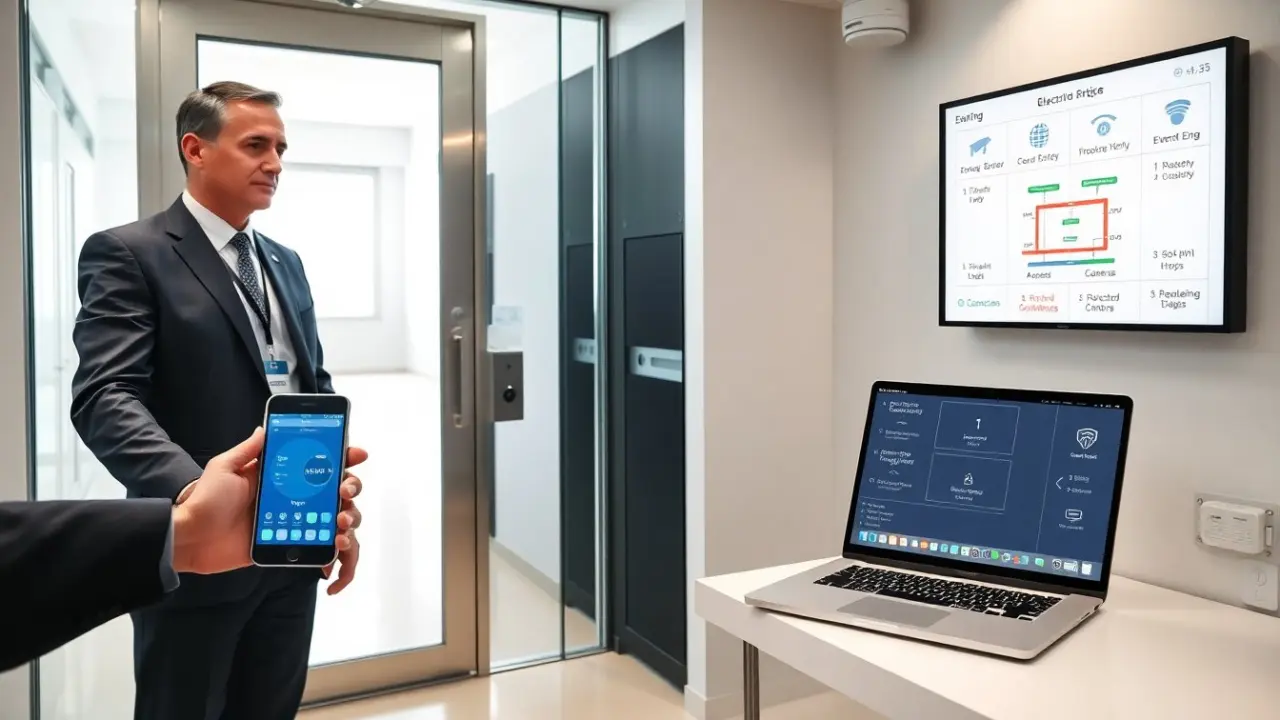
A door access control system gives a site precise entry rules. It limits who opens which doors and when. Managers set access levels, log events, and revoke permissions. The right system reduces theft, stops unauthorized entry, and improves safety. This article explains what a door access control system does, how it works, and how to pick one for 2026.
Key Takeaways
- A door access control system enhances security by precisely managing who can open doors and when, reducing theft and unauthorized entry.
- These systems combine hardware and software to enforce access rules, log events, and alert managers to security incidents in real time.
- Common authentication methods include cards, biometrics, and mobile credentials, each offering unique benefits and security trade-offs.
- Choosing the right door access control system involves evaluating wired, wireless, and cloud options based on budget, reliability, and installation needs.
- Key features to prioritize are multi-factor authentication, strong encryption, event logging, and seamless integration with cameras and alarms.
- Proper installation, regular maintenance, and thorough user training ensure the door access control system remains effective and compliant over time.
What A Door Access Control System Is And Why It Matters
A door access control system is a set of hardware and software that controls physical entry. It uses credentials to grant or deny access. Organizations use these systems to protect people, assets, and data. They replace open keys with rules that the system enforces. A manager can limit access by time, role, or location. The system keeps logs that show who entered and when. These logs help with audits and incident response. In 2026, attackers test weak physical controls first, so a strong door access control system matters for security posture.
How Door Access Control Systems Work: Core Components And Flow
A door access control system has readers, controllers, locks, credentials, and software. Readers read credentials at entry points. Controllers decide to unlock doors based on rules. Locks provide the physical barrier. Software stores rules, manages users, and keeps logs. The flow starts when a person presents a credential. The reader sends the credential to the controller. The controller checks permissions and sends a command to the lock. The lock opens or stays locked and the controller writes an event to the log. The software sends alerts if someone tries to force a door or use a revoked credential. Modern systems link to cameras and alarms to provide context and evidence.
Common Authentication Methods (Cards, Biometrics, Mobile Credentials)
Card readers use RFID or smart cards. They work well for medium security needs. Biometrics use fingerprints, facial templates, or iris scans. They tie identity to a biological trait and reduce credential sharing. Mobile credentials use phones and apps with Bluetooth or NFC. They provide convenience and remote provisioning. Each method has trade-offs. Cards cost less but can be lost or copied. Biometrics require proper hygiene and privacy controls. Mobile credentials need secure phone management and strong app security. A balanced door access control system may use two methods for higher security.
Top Benefits Of Implementing An Access Control System
A door access control system reduces unauthorized entry by enforcing rules at doors. It lowers theft and vandalism risk by limiting access to sensitive areas. The system improves worker safety by restricting hazardous zones. It simplifies key management because admins add or remove digital credentials instantly. The system provides logs that help with investigations and compliance. It can save money over time by reducing rekeying costs and shrinking insurance premiums. It also supports remote control so managers can lock or unlock doors without visiting the site.
Major Types Of Door Access Control Systems (Wired, Wireless, Cloud)
Wired systems use physical cables from controllers to readers and locks. They offer stable performance and suit high-security sites. Wireless systems use radio links between devices. They reduce cabling costs and speed installation for retrofit projects. Cloud systems host management software off-site and give remote administration via web or app. A hybrid approach mixes local controllers with cloud management to keep doors functioning if the internet fails. Each type fits different budgets and needs. A buyer should weigh latency, resilience, and total cost of ownership when selecting a type of door access control system.
Key Features To Look For When Choosing A System
Choose a door access control system with clear user management and role controls. Look for event logging with export and retention options. Pick multi-factor authentication support to raise assurance. Ensure the system supports locking hardware that meets local fire and safety codes. Verify integration with video, alarms, and HR directories for faster onboarding and incident handling. Check for encryption of credentials and communications to prevent replay or cloning attacks. Prefer systems with regular security updates and vendor transparency on vulnerabilities. Also evaluate user interface clarity so staff can operate the system without repeated vendor help.
Installation, Integration, And Maintenance Considerations
Plan wiring, power, and network access when installing a door access control system. Test door hardware and reader placement for reliable reads and safe egress. Integrate the system with cameras and identity directories to reduce duplicate work. Train administrators on user provisioning, log review, and incident response. Schedule software updates and test backups to avoid data loss. Replace batteries and check locks on a cadence the vendor recommends. Conduct periodic access reviews to remove stale credentials. Finally, document procedures so any technician can restore service quickly after a fault.