A small fleet with a handful of trailers and no security team can still make a load a harder target: cargo theft prevention starts with sealed and locked doors, trackers that raise alerts, and overnight stops with lighting and controlled access.
This guide follows a load from the dock to its destination and sends you to a deeper page wherever a topic needs one. If you want the in-transit view first, read how to prevent cargo theft, then return here to set priorities across the whole operation.
Choosing your starting route
Fleets lose loads in different places, so begin where your loads are most exposed rather than with the most fashionable gadget. Pick the route below that matches how you work, and follow the sections in the order shown.
- You load and stage freight at your own dock or yard. Start with staff screening, access control and carrier checks in the dock and yard section, then move to seals and locks.
- Your trailers sit loaded between pickup and delivery. Start with seals and locks, then add tracking so you know when a trailer leaves where it should be.
- Your drivers spend long days and nights away from base. Start with the parking section, then tracking, then the driver rules at the end.
- You hand loads to outside carriers or brokers. Start with verification at pickup, which is where fictitious-pickup fraud is stopped.
If budget allows only a single change first, make it the one that closes the gap your own loss history points to. Most small fleets will find that a few cheap habits, applied every time, beat one expensive device used inconsistently.
What theft data shows about location, goods and value
Cargo theft is not evenly spread: it follows high-value, easily resold goods, and it clusters at points where a load is stationary and unwatched. Reading the pattern first tells you which controls earn their cost.
Where thefts happen
According to transport geography research, theft in transit is the most common event, while thefts in rest areas or while a vehicle is parked often represent opportunistic events. Thefts in a warehouse or freight facility are more complex and require a level of planning. That difference matters for your choices. Opportunistic theft is discouraged by visible, cheap barriers and by not leaving a rig unattended. Planned theft is discouraged by controlling who knows about your loads and who can reach them.
An industry reprint of Great West Casualty guidance, published on an insurance agency blog and dated 7 October 2016, named Southern California, Florida, Texas and the Atlanta, Georgia area as the high-theft areas in the United States. More recently, a summary of CargoNet figures lists California, Texas, Florida and Illinois as the hotspot states for Q2 2023. The overlap is useful: if your routes or overnight stops fall in those states, treat parking and tracking as first priorities rather than later upgrades.
What thieves take
Thieves favour goods with immediate value and market appeal. The transport geography source names food and beverage, electronics and alcohol as the most common targets. If you carry these, assume your loads are attractive even when the trailer looks ordinary, and do not advertise contents on the vehicle or in conversation at truck stops.
Recent loss figures
The CargoNet data summarised by Expedite All counted 582 reported incidents in the United States and Canada in Q2 2023, with over $44 million stolen and a 57% year-over-year increase compared with 2022. The average theft event yielded $260,703. Targets included warehouses, distribution centers, unsecured parking lots and company truck yards.
Value per theft varies by region. The transport geography source puts the median value of thefts at about $80,000 in North America and about $12,000 in Asia, using 2019 data. For a small operator, an average loss on that scale is a business-ending event rather than a line item, which is why the later sections on insurance and on layered controls matter.
Dock and yard: controlling people, paperwork and pickups
The dock and yard are where you control the most variables, and where thefts tend to be planned rather than chance events. Good dock practice is mostly about who is allowed to touch a load and how a collecting driver is verified.
Staff and access
Many thefts are associated with the complicity of a worker, which is why the transport geography source underlines the importance of screening employees. Screening is not only a hiring step. Limit who knows load values, routes and departure times to the people who need them, and keep dock keys, seal stock and trailer locks under a named person’s control.
Outside thieves also prepare. The Great West Casualty guidance notes that organised teams will conduct surveillance on a shipper’s facility for months, weeks or days before a theft. In practice this means noticing vehicles or people that linger near your gate, varying pickup times where you can, and treating unfamiliar interest in your schedule as a security matter.
Carrier verification at pickup
When outside carriers collect from you, verification is your strongest and cheapest control. A GPX cargo theft guide describes the fictitious pickup, where criminals pose as legitimate carriers using forged DOT and MC credentials, and double brokering, where a load is re-brokered without the shipper’s knowledge. Its simplest check is that the carrier name on the truck door matches the bill of lading (BOL).
Make that check a written step that the dock supervisor signs, not a courtesy. Compare the driver, the truck and the paperwork against what you booked, and call the dispatcher on a number you already held, not one printed on the pickup paperwork. The full pattern of how these scams unfold, and what to do when something looks wrong, is covered in our guide to fictitious pickup freight fraud.
Company yards
Company truck yards appear on the list of common theft targets, so a yard that doubles as overnight storage deserves the same thinking as a public truck park: lighting, a controlled entrance and a clear rule for which loaded trailers may stay. Keep a current list of every trailer and tractor in the yard and where it should be, because a missing unit you notice at once is easier to trace than one you discover days later. Fleet Asset Management: How To Cut Costs, Boost Utilization, And Improve Compliance In 2026 – Hardcarsecurity shows how to keep that inventory under control.
Seals and locks: keeping doors honest
Seals tell you whether a door was opened; locks make opening it harder. A small fleet needs both, and needs a routine that makes the seal check mean something.
How tamper-evident seals work
A tamper-evident seal is built to show interference rather than to stop it. The GPX guide recommends using high-security bolt seals or electronic smart seals on every trailer door. The bolt seal marks a door as untouched since it was closed; the electronic version adds a record of events. Either one is only as good as the checking that follows it, so compare the seal number on the load document with the seal on the door at every handover.
Thieves know this. The Great West Casualty guidance describes thieves drilling through bolts, nuts or rivets on a trailer door and replacing them with ones that look the same. So inspect the fasteners around the door as well as the seal itself, and treat a door whose hardware looks newer, brighter or differently seated than its neighbours as suspect before you sign for it.
Pairing seals with hardware
Because a seal is evidence rather than a barrier, pair it with physical hardware on loads that justify the cost. The GPX guide suggests kingpin locks, air cuff locks and landing gear locks on high-value trailers. Which to buy depends on how the trailer is stored and how often it is dropped unattended; our comparison of the best trailer lock choices sets out the trade-offs.
Who holds the keys
The Great West Casualty guidance advises issuing padlocks or trailer security locks to the driver. Drivers who carry their own lock can secure a trailer at any stop without hunting for the dispatcher. Record who holds each lock and key, and collect them when a driver leaves, so a lost key does not quietly become a standing weakness.
Tracking: seeing a vehicle or trailer leave the right place
Tracking does not prevent a theft, but it shortens the time between a theft starting and your knowing about it. Used well, it also gives police a location to work from.
What a tracker should do
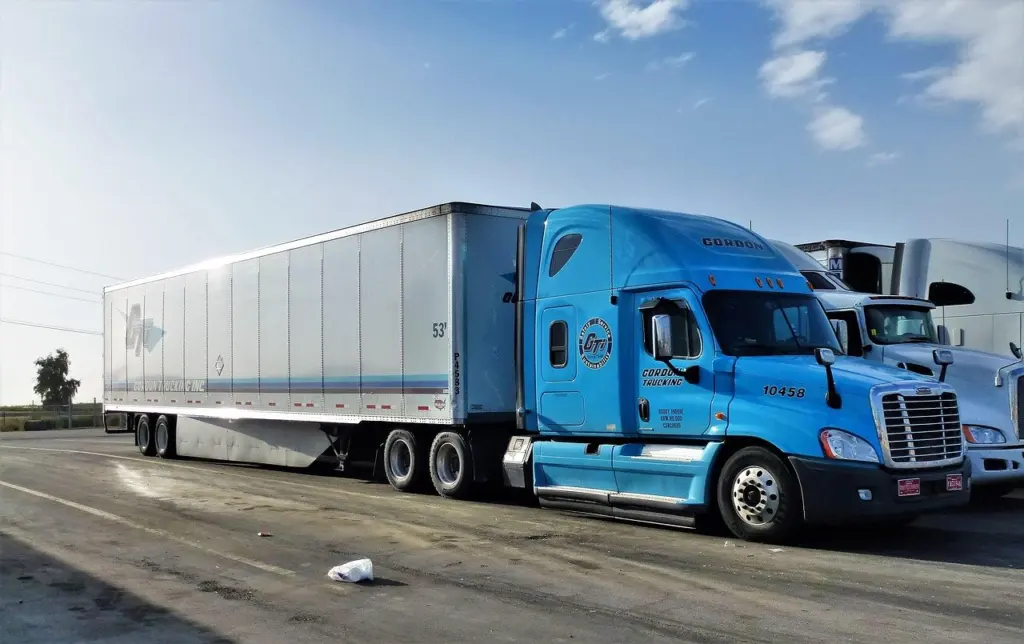
The most useful single feature for theft is the geofence. According to Motive’s guidance on fighting cargo theft with technology, a system can send immediate alerts when a vehicle or trailer moves outside an authorized zone. Set the zones around your yard, your regular customers and your usual overnight stops, and send alerts to a person who will act on them, not only to an inbox. A tracker that is installed but ignored is effectively decoration.
Answering the best-tracker question
There is no single best tracker for every business fleet; the right one depends on whether you need to cover powered vehicles, unpowered trailers or both, and on how you will respond to alerts. Judge devices on the practical points that matter for theft: whether they raise a geofence alert, whether they can follow a trailer when it is not hitched, and how well they hold up against interference.
For trailers that are often dropped, read about a gps tracker for trailers before choosing, because a unit that depends on vehicle power will not follow a trailer left in a lot. For the wider operational picture, GPS Fleet Management: The Practical Guide To Improving Efficiency And Cutting Costs In 2026 – Hardcarsecurity covers what a tracking system can do beyond theft alerts. If subscription fees are the sticking point on smaller vehicles, Best GPS Trackers For Cars Without Subscription In 2026 — One-Time Purchase Options That Actually Work – Hardcarsecurity sets out the alternatives, and GPS Fleet Tracking Pricing: What You Should Really Pay In 2026 — A Clear Cost Breakdown – Hardcarsecurity shows how to judge what a fleet-wide plan should cost. Where several vehicles need to be managed from one screen, Small Fleet Management Software: A Practical Guide For Small Businesses In 2026 – Hardcarsecurity explains how the software side fits together.
Where jamming changes the plan
Organised thieves do not always leave trackers alone. The GPX guide describes signal jamming, using illegal broadcasting devices to block cellular and GPS frequencies within a local radius. That is a reason not to rely on tracking alone for high-value loads. If a device goes silent while a vehicle is somewhere it should not be, treat the silence itself as an alarm and escalate straight away rather than waiting for the unit to reconnect.
Comparing the controls side by side
The controls above do different jobs, and none of them covers every risk. The table lines them up so you can see which gap each one closes and what it leaves open.
| Control | What it addresses | Limit | Planning use |
|---|---|---|---|
| High-security bolt seal or electronic smart seal | Shows whether a trailer door was opened between handovers | Evidence only; fasteners can be replaced with look-alikes | Fit to every door and check the number at each handover |
| Kingpin, air cuff or landing gear lock | Makes it harder to move or hitch an unattended trailer | Does not show whether the cargo door was opened | Reserve for high-value trailers and drop-and-hook stops |
| GPS tracking | Locates a vehicle or trailer after it leaves its place | Cellular and GPS signals can be jammed locally | Treat as one layer, backed by locks and alert response |
| Secure parking with lighting and monitored access | Reduces the chance of an opportunistic hit while stopped | Quality varies between facilities | Plan stops in advance on routes through hotspot states |
| Carrier check against the BOL | Stops a fictitious pickup at your own dock | Forged credentials look genuine on paper | Make it a signed step for every outside carrier |
Figures and recommendations in the table draw on the GPX cargo theft prevention guide and the Expedite All guide to avoiding cargo theft.
The practical reading is that the cheapest rows, the carrier check and the seal routine, close real gaps for almost no money, while the more expensive rows protect against more organised attackers. Buy in that order unless your loss history says otherwise.
Overnight parking: choosing where drivers stop
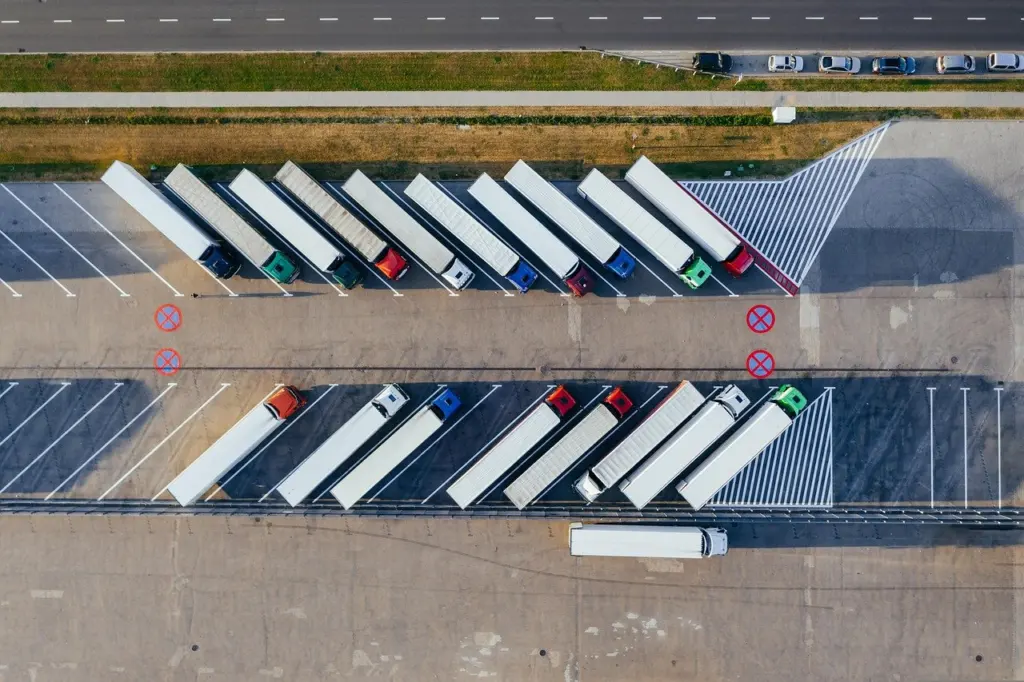
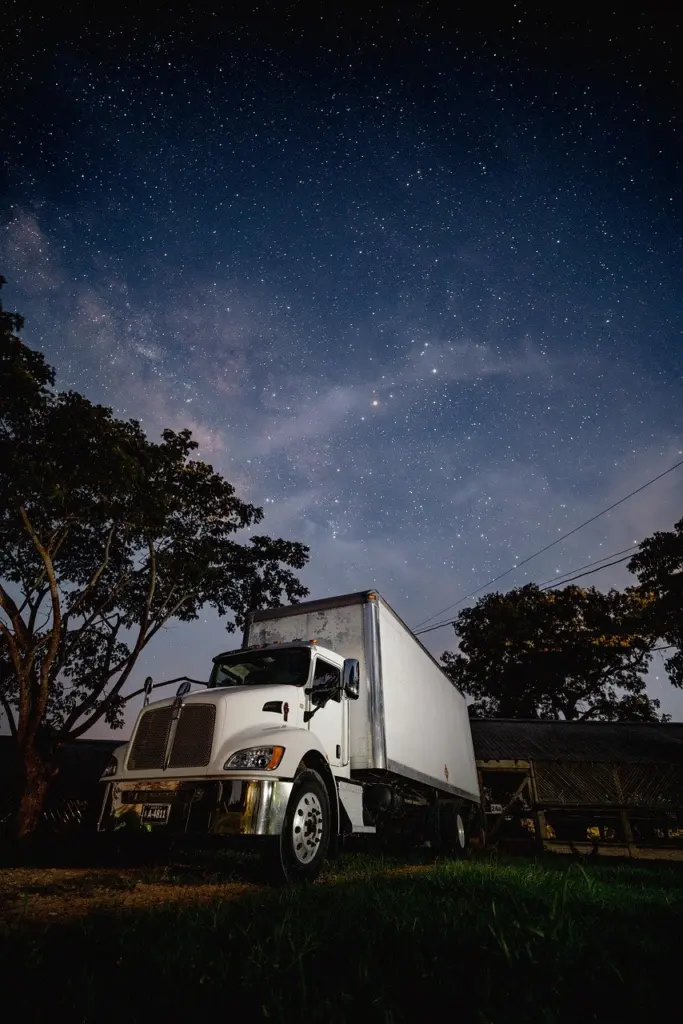
Drivers should park overnight in facilities with good lighting and monitored access, and they should plan the stop before the shift, not at the end of it. Where a load is stationary and a driver is asleep, opportunistic thieves have the advantage.
What to look for
Expedite All notes that secure parking facilities with well-lit areas and monitored access points play an essential role in deterring theft. Treat those two features as a minimum test. If a stop has neither, it is a weaker choice than a better-lit alternative even if it is closer to the delivery. Our dedicated page on secure truck parking goes deeper into assessing a particular site.
Why unattended stops are risky
The Great West Casualty guidance warns that thieves will follow a tractor-trailer for five or six hours waiting for the driver to leave it unattended. A driver who parks, walks away and lingers in a restaurant gives them the opening they are waiting for. So be wary of a stop where the driver cannot keep the rig in view or reach it quickly, and avoid announcing a stop plan over open radio channels or social media.
For high-value loads, the same guidance suggests team drivers where possible, so that the vehicle is not left alone. That has a cost, so reserve it for the loads that justify it and for routes through the states where theft is concentrated.
Measuring the plan and insuring what remains
Controls reduce loss but never remove it, so finish the plan by deciding how you will measure it and what happens when it fails.
Measure what you can act on. Alert response, seal-check completion and the number of stops made at approved locations are within a small fleet’s control, and they fit the framework in Fleet Management KPIs: Measure, Optimize, And Cut Costs In 2026 – Hardcarsecurity. Track them monthly, and review them after any incident or near miss.
Insurance is the safety net, not the plan. Before you rely on a policy, find out what does cargo insurance cover on your own cover, including exclusions and the conditions a claim must meet. The wider question of protecting vehicles, drivers and the business is covered in Fleet Risk Management Insurance: How To Protect Your Vehicles, Drivers, And Bottom Line In 2026 – Hardcarsecurity.
Some fleets carry more than freight. Operators moving tools and equipment to job sites face a different risk profile at each site, which Fleet Tracking For Construction: Reduce Costs, Boost Productivity, And Improve Safety In 2026 – Hardcarsecurity addresses. Fleets that already use telematics to watch consumption can apply the same data discipline described in Fleet Fuel Management: Cut Costs, Boost Efficiency, And Reduce Emissions In 2026 – Hardcarsecurity, so one tracking system serves more than one purpose.
A sensible order of work for a small fleet
Put the cheapest and most repeatable habits first, then add equipment as loads and budget justify it.
- Fix paperwork and pickups. Make carrier-to-BOL matching a signed step, and restrict who knows load values and schedules.
- Standardise seals. Fit a high-security seal to every door and inspect the door fasteners as well as the seal number at each handover.
- Issue locks to drivers. Add kingpin, air cuff or landing gear locks to the trailers that carry food and beverage, electronics, alcohol or other goods with immediate resale value.
- Add geofenced tracking. Set zones around the yard and regular stops, and name the person who responds to alerts.
- Plan parking and team coverage. Pre-select lit, monitored stops on every route, and use team drivers on the most valuable loads.
This order reflects the evidence in the sections above: opportunistic and planned thefts both exploit weak routine before they exploit weak technology. Hardware and software then close what routine cannot.
Frequently asked questions
| Question | Answer |
|---|---|
| Is GPS tracking enough to protect a trailer? | No. Tracking helps you find a trailer, but thieves use illegal devices that block cellular and GPS frequencies in a local radius, so pair it with seals and physical locks. |
| Are cargo thefts always committed by outsiders? | No. Many thefts are associated with the complicity of a worker, which is why employee screening and limited access to load details are part of a sound plan. |
| What should a dock check before releasing a load to an outside carrier? | Confirm that the carrier name on the truck door matches the bill of lading, and be alert to forged DOT and MC credentials used in fictitious pickups. |
| Which US states have reported the most cargo theft? | CargoNet figures for Q2 2023 name California, Texas, Florida and Illinois as the hotspots; an older insurer reprint listed Southern California, Florida, Texas and the Atlanta, Georgia area. |